












For Private Equity Firms
Turn fragmented portfolio reporting into trusted portfolio intelligence.
One governed reporting layer above the systems and files each company already uses.
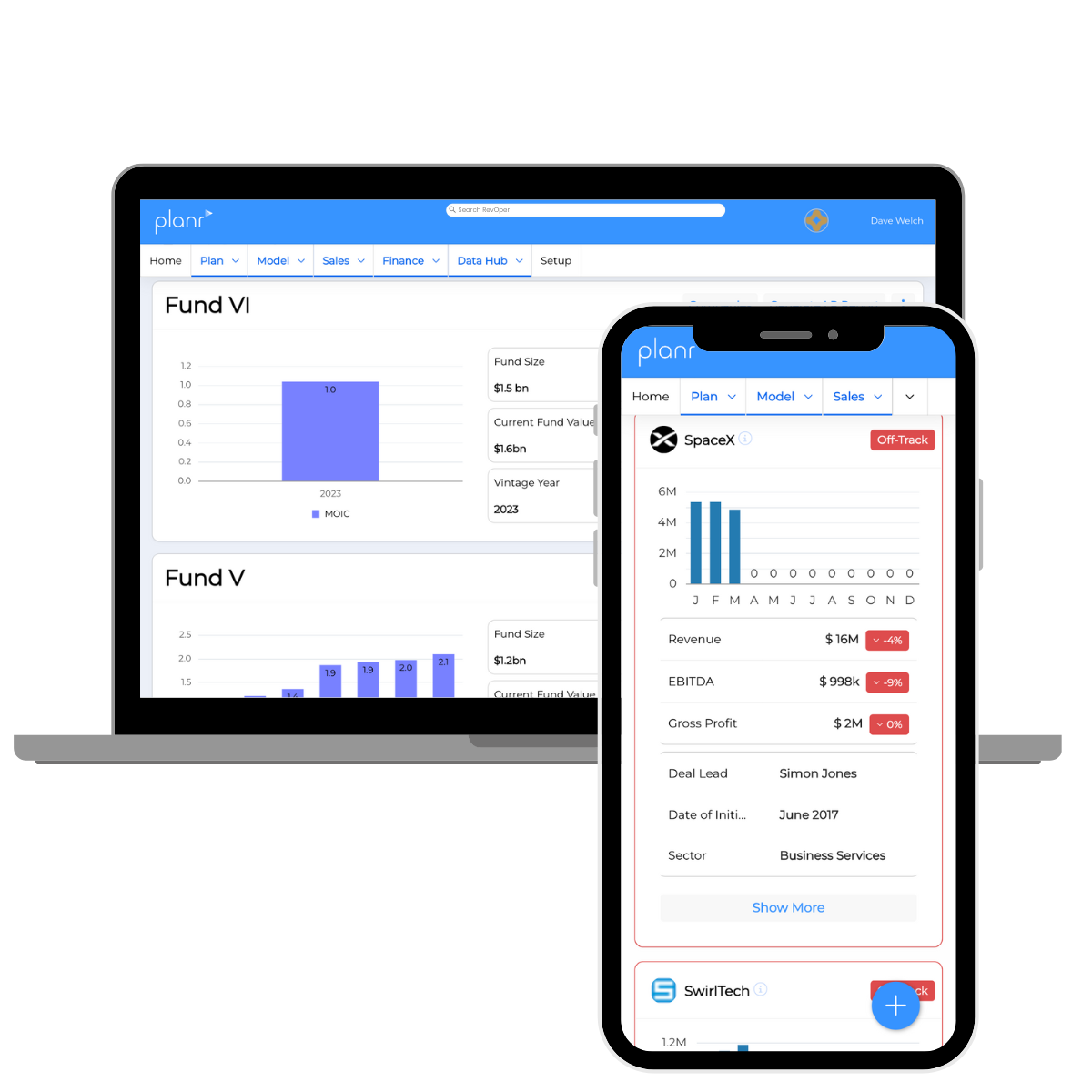
Planr helps PE firms collect, standardise, validate, and analyse portfolio company reporting, so deal teams and operating partners can see which companies are on plan, which are drifting, and where the numbers came from.
Trusted by private capital teams managing portfolio reporting
The PE firm problem
Every portfolio company reports differently. The firm still needs one view it can trust.
PE firms do not usually lack data. They lack a governed way to compare it. One company reports from an ERP, another from Excel, another from a board pack, another from a CRM export. Definitions drift. Timing varies. Teams spend the reporting cycle reconciling files instead of understanding what changed.
Fragmented sources
Portfolio data arrives from ERPs, CRMs, spreadsheets, PDFs, board packs, and other company-level systems.
Inconsistent definitions
Metrics that look similar across companies may not mean the same thing until they are mapped into a common model.
Slow reporting cycles
Board packs, MFRs, weekly flash updates, and partner views take too much manual effort to prepare.
Weak trust in the numbers
If teams cannot see where a number came from, they hesitate to act on it.
Scale pressure
The workflow breaks when the portfolio scales.
Spreadsheet-led reporting can work for a smaller portfolio. It becomes fragile when the firm adds new companies, new funds, new operating KPIs, and more investor reporting pressure.
Portfolio growth
More companies, add-ons, and reporting formats turn a manageable process into a recurring consolidation burden.
New fund or scale inflection
What worked for a smaller portfolio may not support the reporting expectations of a larger platform.
Board and LP reporting pressure
Partners and investors expect faster answers, cleaner comparisons, and fewer caveats.
Value creation pressure
Operating partners need earlier signals, not just backward-looking reporting after the quarter closes.
Build fatigue
BI and warehouse projects still need PE-specific data mapping, governance, submission workflows, and ownership.
Legacy tool fatigue
Rigid templates and finance-only tools can leave teams with the same mapping, trust, and adoption problems underneath.
Portfolio data layer
Planr turns mixed company reporting into one governed portfolio model.
Planr sits above the systems and files each company already uses. It helps the firm collect, standardise, validate, analyse, and report without forcing every portfolio company into the same operating stack.
01
Ingest
Connect to finance systems, CRMs, spreadsheets, PDFs, board packs, and source exports.
02
Standardise
Map company-level reporting into a portfolio model for cleaner comparison.
03
Validate
Use source links, review workflows, snapshots, and approval controls before teams rely on the numbers.
04
Analyse
Give deal teams and operating partners portfolio-wide views, variance signals, and KPI comparisons.
05
Report
Support board packs, MFRs, LP reporting, fund views, and operating reviews.
The value is not only the dashboard. It is the reusable reporting logic underneath it: mapped definitions, source links, review steps, snapshots, and permissions.
Not another dashboard. A governed reporting layer beneath the portfolio view.
Dashboards only help when teams trust the inputs. Planr helps PE firms define, map, validate, and reuse the reporting logic underneath the view.
Stakeholders
One reporting layer. Different questions answered from the same numbers.
See which companies are drifting before the next formal review.
Deal partners need a firm-level view that shows which companies are hitting plan, which need attention, and where the portfolio view can be trusted.
- Compare performance across portfolio companies with cleaner definitions.
- Use portfolio-wide views without chasing every source file.
- Focus review time on movement, risk, and action.
Turn operating reporting into earlier value creation signals.
Operating partners need to see where performance is changing while there is still time to help management teams act.
- Track operating KPIs across different company systems.
- Connect value creation initiatives to recurring reporting views.
- Spot drift earlier than the quarterly board cycle.
Work from a reporting model with clearer lineage.
Fund finance teams need source traceability, period discipline, and repeatable outputs without manual consolidation becoming the process.
- Preserve source links, snapshots, and review history.
- Support fund, LP, board, and management reporting workflows.
- Reduce the recurring scramble behind reporting packs.
Give portfolio companies controlled ways to submit and review data.
Portfolio company CFOs can preserve control over sensitive data while giving the firm the recurring view it needs.
- Use flexible submission paths instead of one rigid template.
- Review and approve data before it is published to the portfolio view.
- Keep the company workflow practical while improving firm-level visibility.
Why Planr
Dashboards are only as good as the reporting layer underneath them.
Excel
Familiar, but exposed to version drift.
BI tools
Useful views without the reporting model.
Planr
Governed portfolio reporting layer
Internal builds
Control today, maintenance tomorrow.
Legacy tools
Templates can add friction and workarounds.
Planr sits beneath the portfolio view, standardising the logic before the dashboard, pack, or partner review depends on it.
Trust layer
Built for numbers that need to be defended.
PE reporting is only useful when the firm can inspect the number, understand where it came from, and control who can see it.
Source traceability
Help teams trace reported metrics back to the systems, files, models, or documents behind them.
Human review
Support review and approval workflows where data quality, sensitive information, or AI-assisted extraction requires control.
Snapshots and version control
Preserve the state of reporting periods so teams are not constantly chasing moving files.
Permissions and governance
Give the right people access to the right level of detail across firm, fund, portfolio, and company views.
Use cases
Common PE reporting workflows Planr can support.
- Portfolio performance monitoring
- Board pack and MFR preparation
- KPI standardisation across portfolio companies
- Weekly flash reporting
- Fund and LP reporting workflows
- Value creation tracking
- Add-on and acquisition reporting integration
- Portfolio company submission and approval workflows
FAQ
Questions PE teams usually ask before changing portfolio reporting.
How does Planr standardise reporting across different portfolio companies?
Planr maps company-level reporting into a common portfolio model, while preserving the source data and local context behind each company view.
Do portfolio companies need to change systems?
No. Planr is designed to work above the systems and files portfolio companies already use. The goal is to create a governed reporting layer, not force every company onto the same operating stack.
Can Planr handle spreadsheets, PDFs, and board packs?
Yes. Planr supports mixed ingestion paths, including systems, spreadsheets, documents, and existing reporting packs.
How does Planr work with Power BI or a data warehouse?
Planr can complement existing BI and warehouse investments by solving the PE-specific reporting model, submission workflow, mapping, and governance layer.
Who inside a PE firm typically uses Planr?
Deal partners, operating partners, portfolio operations teams, fund finance teams, and portfolio company finance leaders can all use Planr, with different permissions and views.
How does Planr protect trust in the numbers?
Planr supports source traceability, review workflows, snapshots, version control, and permissions so teams can inspect how a metric was produced before acting on it.
Demo
See how Planr would turn your portfolio reporting workflow into a trusted portfolio view.
Bring your current reporting process, portfolio structure, or sample pack. We will show how Planr can map the sources, preserve the lineage, and turn fragmented company-level reporting into a governed portfolio view.